Last updated on March 16th, 2026 at 12:38 pm
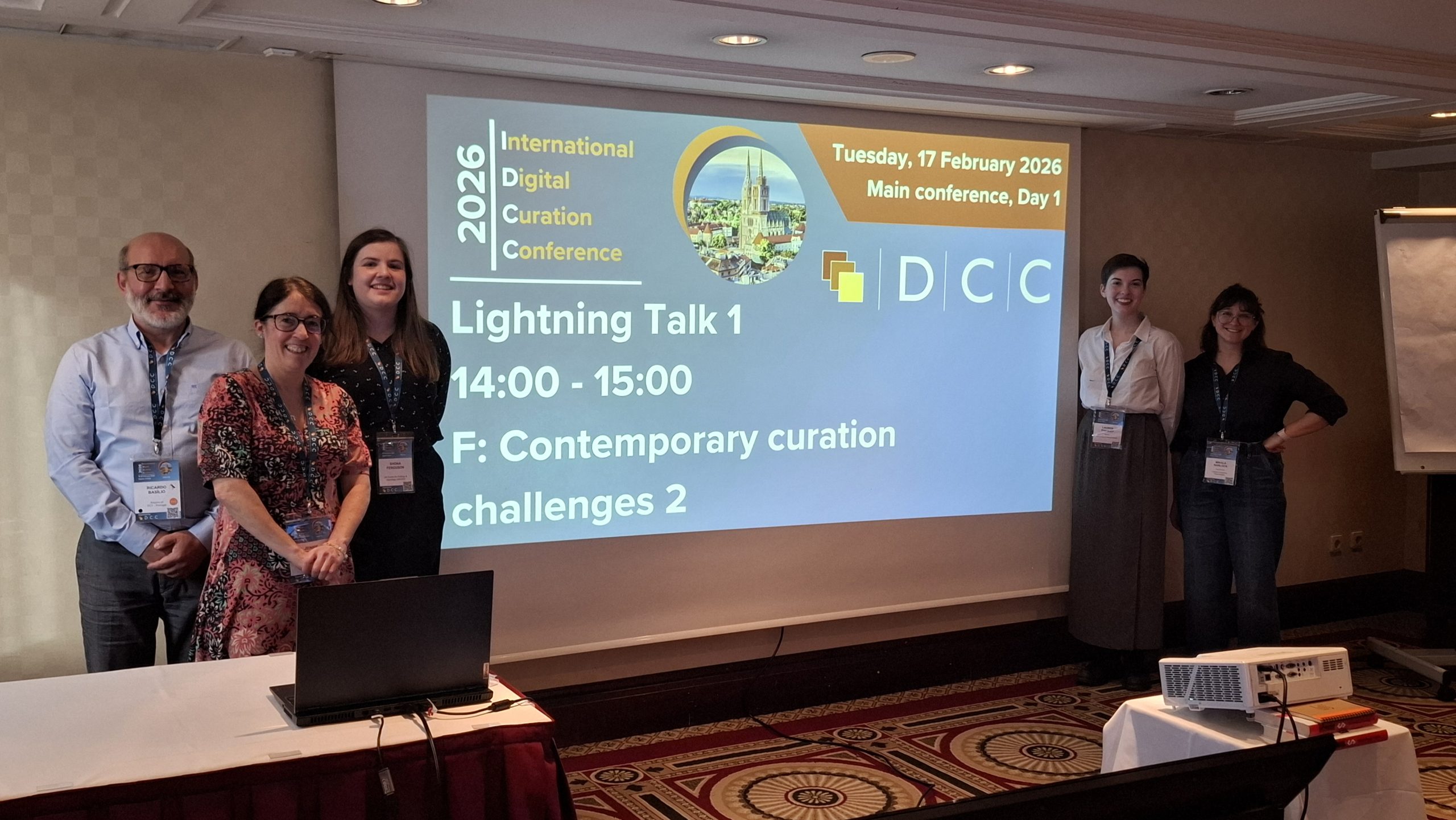
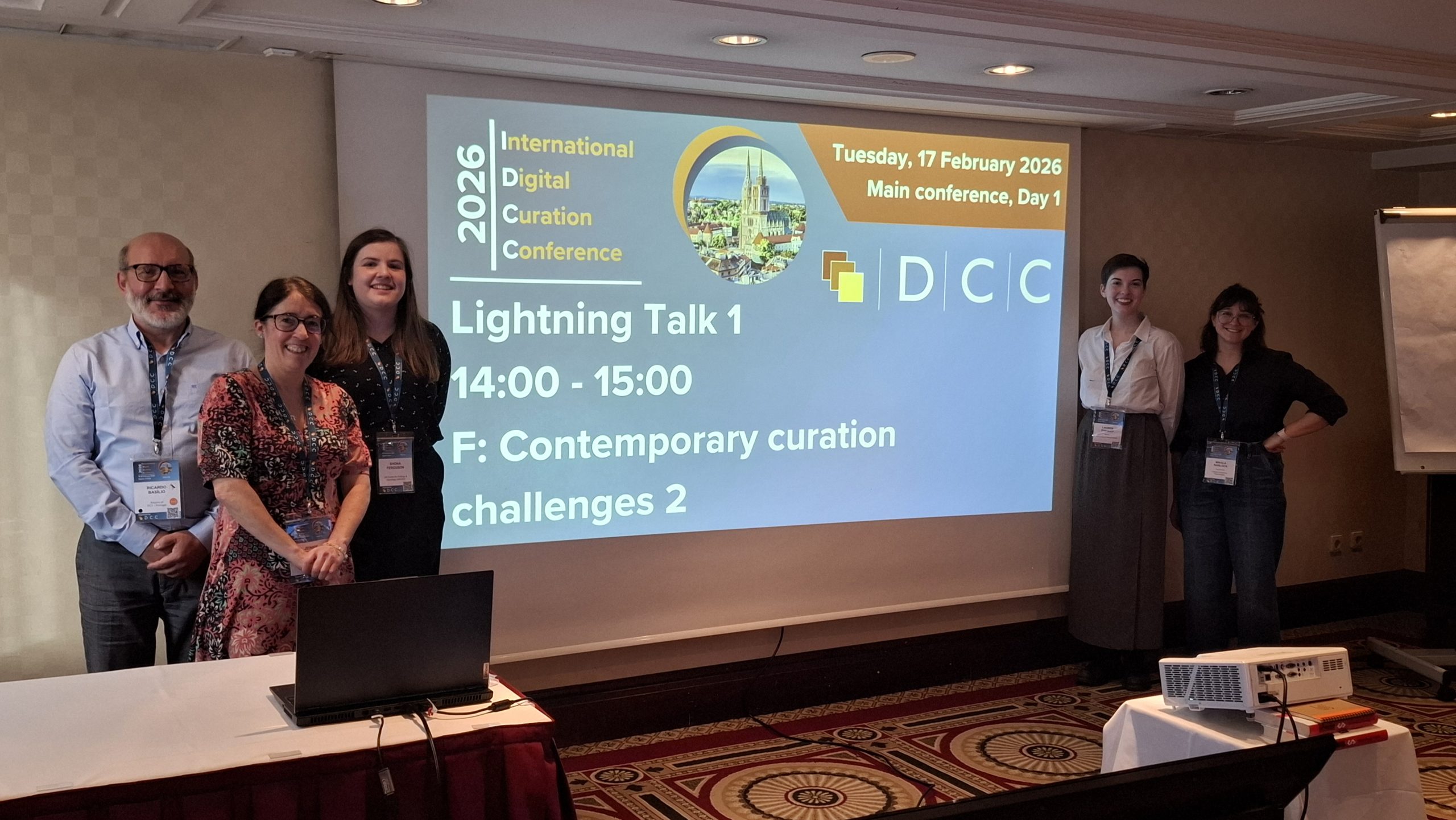
Arquivo.pt participated in the International Digital Curation Conference with a presentation entitled How Arquivo.pt is Preserving scientific research project websites and promoting data reuse, represented by Ricardo Basílio, digital curator.
IDDC 2026 took place in Zagreb, Croatia, between February 16 and 18. The organizer of this annual event is the Digital Curation Center, a leading consortium in the field of data management and curation for scientific research. This event had 219 attendees from 30 countries including 5 from Portugal.
The same panel, moderated by Mikala Narlock, from the Indiana University, featured the following presentations: Organizing a community to survive research ecosystem instability, by Lauren Phegley, from the University of Pennsylvania, What should be saved? The impact of austerity on data rescue, by Shona Jane Fergusonm, from the UK Centre for ecology and hydrology, and How do you calculate the carbon footprint of your digital preservation activities?, by Jenny Mitcham from the Digital Preservation Coalition.
Contemporary challenges in digital curation
The theme of this year’s conference was “AI, austerity, and authoritarianism: contemporary challenges in digital curation.”
At the opening, Antica Čulinam, from the Ruder Boskovic Institute, addressed the issue of the reliability of science, which requires transparent, scrutinized processes and well-documented, unbiased data.
In parallel sessions, other current challenges were addressed, such as carbon footprint, the use of AI, successful cases of data management, and community engagement.
In the closing session, the topic of web preservation was highlighted with a presentation by Mikala Narclock from Indiana University and Linda Kellam from Pennsylvania University on the Data Rescue Project.
Urgency is a determining factor in web preservation, especially when scientific research results are involved.
Tribute to Kevin Ashley
The final moment of the conference was to honor Kevin Ashley, director of the DCC since April 2010. Since the 1990s, he has worked on the development and provision of digital preservation services as head of digital archives at the University of London Computing Center (ULCC). As leader of the DCC and a great communicator, he has played a charismatic role in the development of data management planning, advice, guidance, and training.
In Portugal, we have records of two presentations by Kevin Ashley at the 5ª Conferência Luso-Brasileira sobre Acesso Aberto (CONFOA) at the Universidade de Coimbra in 2014, which we recall here:
Contribution of Arquivo.pt to the preservation of scientific research results
Arquivo.pt, a digital service provided by FCT, has among its priorities the preservation of all types of information published on the Web related to research projects, such as project websites, abstracts of scientific publications, news in the media related to projects and, in general, all information on the Web referenced in scientific publications.
For example, and this was the case presented to conference participants, in 2021, Arquivo.pt identified and collected 17 terabytes of information related to projects funded by the European Commission’s H2020 program. Until then, 46% of H2020 projects did not mention their websites or project pages in the data published on the European data portal Cordis.
Based on this successful initiative, Arquivo.pt has been systematically collecting content related to the projects, in collaboration with RCAAP, PTCRIS, and Ciência Vitae, from which URLs of publications available on the Web are obtained.
Use of Arquivo.pt by researchers
At the same time that Arquivo.pt took the initiative to record web content produced by researchers, the number of use cases of Arquivo.pt increased year on year. In other words, we have more researchers making use of the data and testing methodologies. We found some examples in LLMs for the Portuguese language, such as GlórIA and AmálIA, and in the works competing for the Arquivo.pt Award.
For example, in 2025, a group of researchers from CIDEHUS – Centro Interdisciplinar de História, Culturas e Sociedades da Universidade de Évora, used Arquivo.pt to create the work Narrative Monitoring: Analysis of Conspiracy Theories of Population Replacement in the Portuguese Web Archive (1996-2021).
The aim was to show the audience that the preservation of scientific research results requires the involvement of the researchers themselves. Once they are familiar with and use Arquivo.pt, they are also better prepared to take care of the preservation of their publications.
Know more